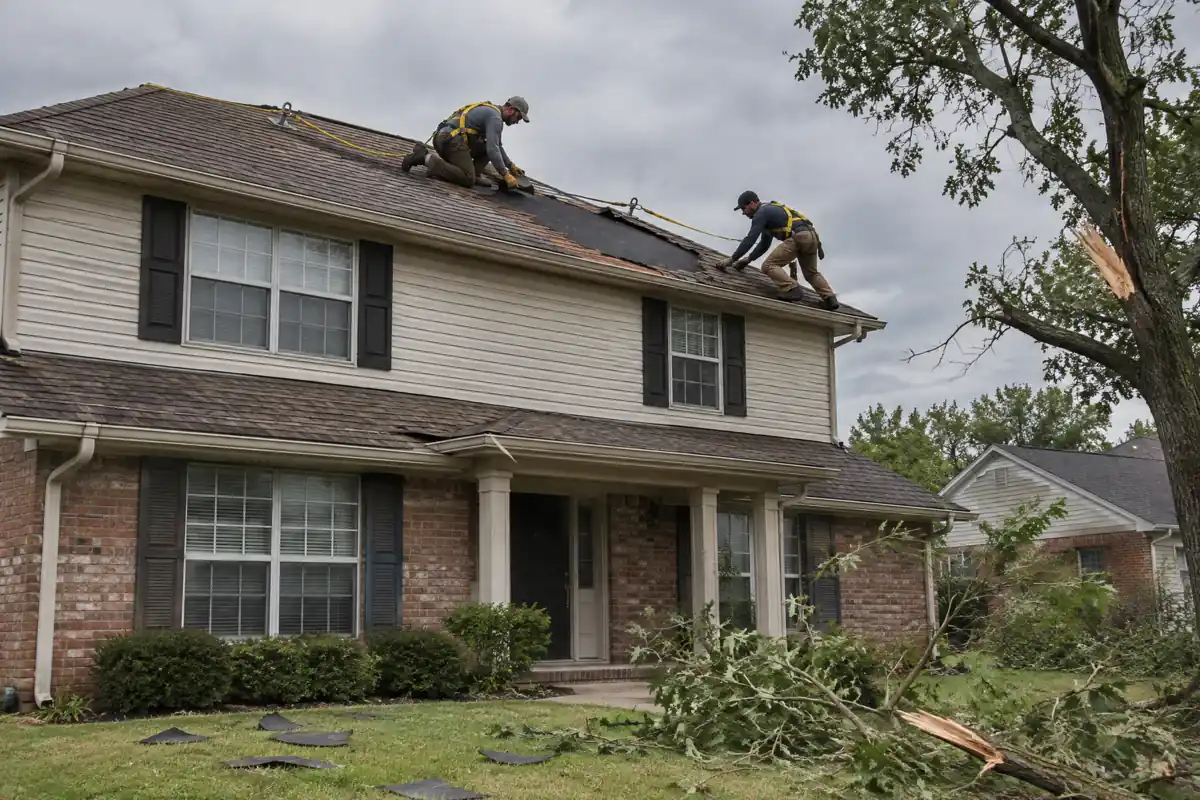
How wind damages a roof
Wind does not push straight down on a roof. It flows over the ridge and creates suction on the downwind side, which pulls at the edges of shingles. Once a tab breaks its seal strip it can flap in every gust after that, creasing along the nail line until it tears away. The edges of the roof, the corners and the ridge take the most force, which is why damage often starts at the rakes and eaves.
Tulsa sees strong straight-line winds from thunderstorm lines as well as tornadoes, mostly between March and June, with occasional damaging winds in fall. Ice storms in winter add a different risk: heavy limbs breaking onto the roof.
Common types of storm damage
- Creased or lifted shingles. A horizontal line across a tab, often invisible until you look closely, means the seal has broken.
- Missing shingles and exposed underlayment. The most obvious sign, and the most urgent if rain is coming.
- Ridge cap loss. The ridge is exposed to wind from every direction.
- Flashing and drip edge pulled loose. Lets water in at walls, chimneys and eaves.
- Tree and limb impact. Can crack rafters and puncture decking, not just shingles.
- Debris strikes. Patio furniture, trampolines and fence boards thrown by tornado winds can gouge a roof.
What happens on a storm damage call
The first job is to stop water getting in. That might be a tarp secured over the damaged section or, for smaller openings, a temporary dry-in with underlayment. Once the house is protected, the roofer can assess the damage properly, photograph it, and give you a written scope for the permanent repair or replacement.
If a tree is resting on the roof, the tree usually needs to come off first, ideally by a tree service that can lift it without causing more damage. Do not try to cut or pull a limb off a roof yourself.
Repair versus replacement after wind
Wind damage is often patchy. A few missing shingles on one slope are usually repaired. But if shingles across the roof have lost their seal, they will keep blowing off in future storms, and replacement may be the only lasting fix. A roofer can lift tabs gently in several areas to check how well they are still sealed.
| Damage | Do first | Usually followed by |
|---|---|---|
| A few missing shingles | Photograph, cover if rain is due | Spot repair with matching shingles |
| Large section of roof exposed | Emergency tarp or dry-in | Section repair or replacement |
| Limb through the roof | Keep clear, call for tree removal and tarp | Structural repair of decking and possibly rafters |
| Flashing torn at a wall or chimney | Tarp over the joint | New step and counter flashing |
| Widespread creased shingles | Inspection to check seal strength | Insurance claim and likely replacement |
Documenting storm damage for insurance
Take wide photos of the house from each side, then close-ups of the damage. Keep receipts for tarps or emergency work, because many policies expect you to take reasonable steps to prevent further damage and may reimburse those costs. Note the date of the storm. The insurance claim page explains the steps that follow.
Staying safe after a storm
Stay off the roof. Watch for downed power lines in the yard and around the service drop, and call PSO or your electric co-op if a line is down or a limb is on the service wire. If you smell gas, leave the house and call your gas utility from outside.
Questions people ask
What wind speed damages shingles?
It varies with the shingle rating, age and installation. Many standard shingles are rated for winds in the 60 to 110 mph range when properly installed, but older or poorly sealed shingles can lift at lower speeds.
Should I tarp the roof myself?
It is safer to have a roofer do it. Wet, damaged roofs are slippery and may not hold weight. If you must protect belongings, work from inside the house with buckets and plastic.
Does insurance cover a tree falling on my roof?
Most homeowners policies cover damage to the house from a tree blown down by a storm. Coverage for removing the tree itself is often limited. Check your policy.
Can wind damage be hidden?
Yes. Shingles can lose their seal and crease without blowing off. A careful inspection can find this before it turns into missing shingles.