Step 1: Stay safe while the storm passes
Hail usually arrives with severe thunderstorms, and in northeast Oklahoma those storms can also bring damaging wind, lightning and tornadoes. Stay indoors and away from windows until the storm has fully passed and any warnings have expired. Once it is over, walk around the outside of the house carefully. Look up for hanging limbs and down for power lines. If a line is down or tangled with a tree, keep well away and call your electric utility.
Do not climb onto the roof. Hail-covered and wet shingles are slippery, and storm-damaged decking may not hold your weight. Everything in this checklist can be done from the ground or from inside.
Step 2: Record the storm while the evidence is fresh
Hail melts within minutes, so this step is time-sensitive.
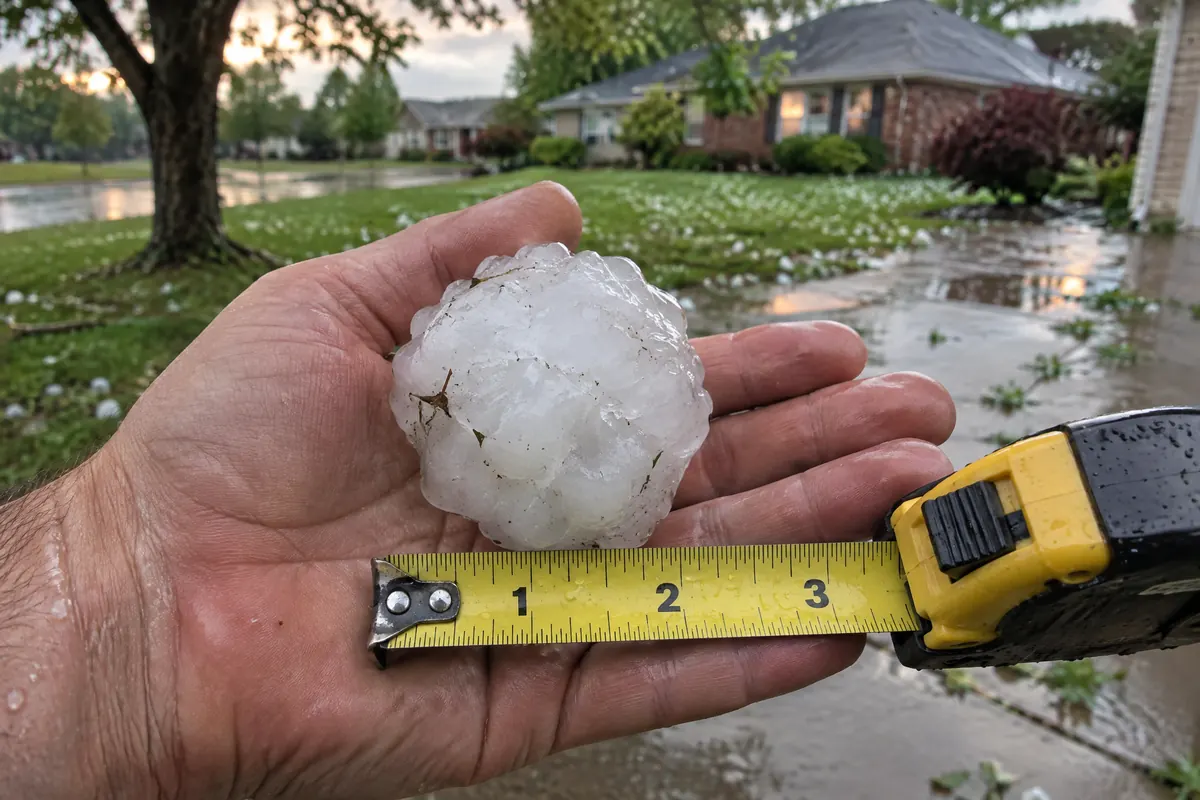
- If you can do it safely, pick up a few of the larger hailstones and photograph them next to a coin, a tape measure or a ruler.
- Note the date, time and rough duration of the hail.
- Photograph hail piled on the ground, the deck or the patio.
- Take a short video of the storm from a safe spot if it is still going; the timestamp is useful.
Insurers and roofers use hail size and timing to understand what your roof went through. Your photos sit alongside official storm reports from the National Weather Service office in Tulsa, which logs hail reports by location.
Step 3: Look for clues around the house
You do not need to see the shingles to get a good idea of whether the roof was hit. Soft metals and outdoor equipment tell the story:
| Where | What to look for | What it tells you |
|---|---|---|
| Gutters and downspouts | Round dents, dings along the front edge | Hail size and that the house was in the hail swath |
| Roof vents and caps | Dents visible from the yard with binoculars | Hail struck the roof itself |
| Air-conditioner unit | Bent fins on the condenser | Size and direction of the hail |
| Window screens and wraps | Tears and dents | Direction the storm came from |
| Downspout outlets | Piles of shingle granules | Hail knocked granules off the shingles |
| Cars, fences, mailboxes | Dents, chipped paint | Collateral evidence for your claim |
| Yard | Pieces of shingle, ridge cap or vent | Wind or hail broke parts of the roof |
Photograph each one, with a wide shot to show where on the house it is and a close-up to show the damage.
Step 4: Check inside for leaks
Look at ceilings in every room under the roof, especially top-floor rooms and closets, and around light fixtures, chimneys and skylights. If you can get into the attic safely, stepping only on the joists, look for water on the decking, wet insulation or daylight. If water is coming in, move belongings, put down buckets and towels, and take photos.
Step 5: Stop further damage
Most homeowners policies expect you to take reasonable steps to prevent more damage after a covered loss. If there is an active leak or an opening in the roof, arrange an emergency tarp or temporary dry-in. Keep the receipts and photos of the temporary repair; many policies reimburse those costs as part of the claim.
Step 6: Get a roof inspection
A roofer can get up close and check each slope for bruised, cracked or punctured shingles and damaged flashing. Many use test squares, a marked 10-by-10-foot area on each slope where they count hail hits, which is a method adjusters often use too. Ask for photos of everything found and a written summary.
Having an inspection before you file helps you avoid claims for damage that may not be covered, such as normal wear, and gives you evidence to compare with the adjuster's findings.
Step 7: Report the claim promptly
Read your policy for the notice requirements. Many require prompt notice of a loss, and some set a deadline for wind and hail claims. Call your insurer or use their app, give them the date of the storm and describe what you found. Ask what your wind and hail deductible is; in Oklahoma it is sometimes a percentage of your home's insured value rather than a flat dollar amount. The Oklahoma roof insurance claims guide explains what happens next.
Step 8: Be careful who you hire
After big storms, crews from outside the area often go door to door through Tulsa neighborhoods. Some are legitimate; some leave as soon as the money is paid. Protect yourself:
- Ask for the contractor's Oklahoma Construction Industries Board registration number, and check it.
- Ask for proof of liability insurance and a local address.
- Do not sign anything on your doorstep the same day.
- Be wary of anyone who offers to pay or waive your deductible. Oklahoma law has prohibited that since November 1, 2022.
- Know that you can cancel an insurance-funded roofing contract within 72 hours of receiving written notice from your insurer that the claim has been denied in whole or in part.
- Never pay the full price before the work is done.
Our guide to checking an Oklahoma roofer goes into more detail.
Step 9: Think about the next storm
If your roof needs replacing, consider whether Class 4 impact-resistant shingles or a FORTIFIED roof make sense. They may cost more up front but can reduce damage from future storms, and many Oklahoma insurers give premium credits for them.
Quick checklist
- Stay safe; stay off the roof.
- Photograph hailstones with a coin or ruler, and note the time.
- Photograph dents on gutters, vents, the AC unit and cars.
- Check ceilings and the attic for leaks.
- Cover leaks and keep receipts.
- Get a roof inspection with photos.
- Report the claim promptly and check your deductible.
- Hire a registered, insured roofer and get everything in writing.
Questions people ask
How soon after a hailstorm should I get my roof inspected?
As soon as practical, ideally within days. Damage can let water in during the next storm, and prompt inspection helps with any claim.
Can hail damage a roof without causing leaks?
Yes. Bruised shingles often do not leak at first, but lose granules and age faster, leading to leaks months later.
Do I need to be home for a roof inspection?
Not always, but it helps to be there to see the photos and ask questions.
Should I file a claim for small hail?
Get an inspection first. If damage is minor or below your deductible, a claim may not be worthwhile.
What if hail damaged my car and my roof?
Auto damage is claimed on your auto policy and roof damage on your homeowners policy, usually as separate claims.