Why roof leaks are hard to find
Water rarely drips straight down from the hole. It gets under a shingle, runs down the felt or along the top of a rafter, and drops onto the ceiling wherever it finds a low point. A stain over the living room can start at a vent pipe two rafters up-slope. That is why a leak repair starts with tracing, not patching.
The most common leak sources on Tulsa homes
| Source | Why it fails | Typical fix |
|---|---|---|
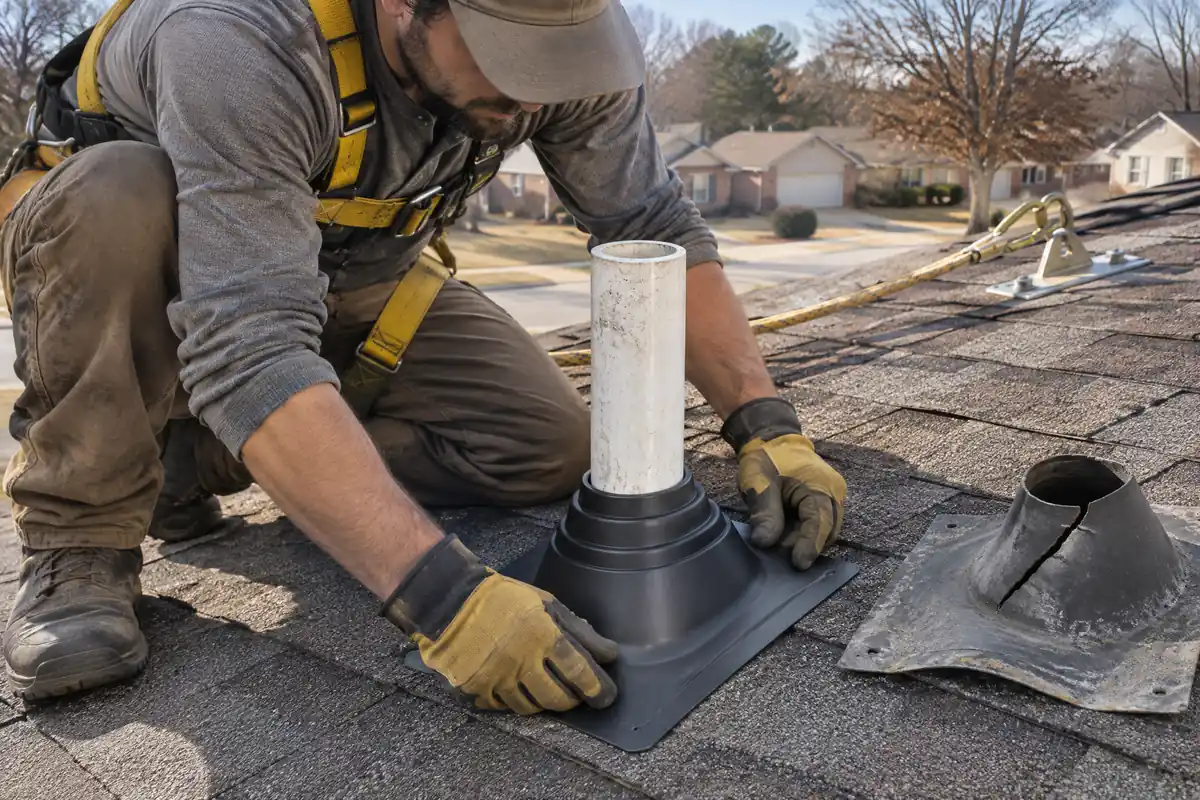
| Plumbing vent boots | Rubber collars crack after years of Oklahoma sun | Replace the boot or install a new flashing collar |
| Chimney flashing | Sealant dries out, step flashing rusts or was never cut into the mortar | New step and counter flashing |
| Valleys | Concentrated water flow wears shingles faster | Rebuild the valley with ice and water membrane |
| Skylights | Failed seals or poorly flashed curbs | Reflash or replace the skylight |
| Nail pops | Nails back out with temperature swings | Reset or replace nails and the shingle above |
| Wall junctions | Missing kick-out flashing sends water behind siding | Add kick-out and step flashing |
| Ice dams (rare winters) | Snow melts and refreezes at cold eaves | Ventilation fixes and eave membrane |
How a roofer traces a leak
A roofer will usually start in the attic, where water staining on the decking and rafters points back toward the entry point. On the roof, they look closely at every penetration and flashing joint up-slope from the stain. For stubborn leaks, a controlled water test, wetting one section at a time with a hose while someone watches inside, can pin down the source. Photographs of where the stain appears and when, for example only in wind-driven rain from the south, are a big help.
What the repair involves
Once the source is found, the fix is specific. A cracked vent boot is replaced. Chimney flashing may need to be rebuilt with step flashing under each course of shingles and counter flashing set into the mortar joints. A worn valley is stripped and relaid over self-adhered membrane. Wet decking is replaced, and any soaked insulation should be pulled out and replaced so it does not stay damp.
Caulk and roofing cement have their place, but a leak repair that relies only on a tube of sealant usually fails again within a season or two. Ask the roofer what they are replacing, not just what they are sealing.
Signs of a slow leak
- Yellow or brown rings on ceilings that grow after storms.
- Peeling paint or bubbling near the top of walls.
- Musty smells in upper rooms or closets.
- Dark streaks on rafters or decking in the attic.
- Higher cooling bills, because wet insulation does not insulate.
Costs and timing
Leak repairs vary widely. A vent boot replacement is quick; rebuilding chimney flashing or a valley takes longer and costs more. Ask for a written estimate that names the source and the fix. Most leak repairs are completed in a single visit once the source is confirmed, though a water test can add time.
When a leak points to a bigger problem
If you have several leaks in different places, or the shingles around the leak crumble when touched, the roof may be near the end of its life. A roofer can tell you whether repair still makes sense. See the repair or replace guide for the decision points.
Questions people ask
Why does my roof only leak in certain storms?
Leaks that appear only in wind-driven rain from one direction often point to flashing or wall junctions on that side of the house, where wind pushes water sideways under the materials.
Can I just put sealant on the leak?
Sealant can be a short-term stopgap, but most leaks need the failed part replaced, such as a vent boot, flashing or worn shingles, to stay fixed.
Is a roof leak covered by insurance?
Leaks caused by sudden storm damage are often covered. Leaks from wear and old age usually are not. Interior water damage may be covered depending on the cause. Check your policy.
How quickly should a leak be repaired?
As soon as possible. Ongoing leaks soak insulation and decking, encourage mold and can damage ceilings and wiring.