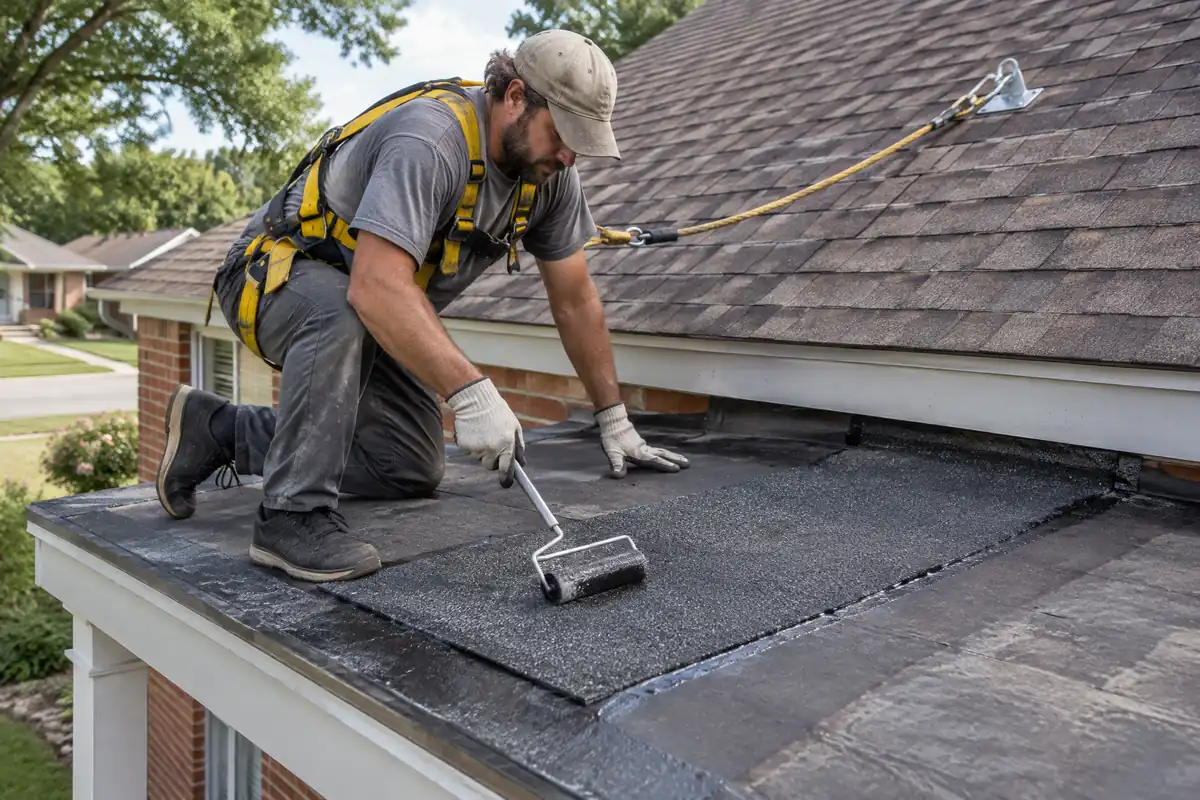
Where flat roofs show up on Tulsa homes
Most houses in the metro have pitched shingle roofs, but plenty have at least one low-slope section: a back porch tied into the main roof, a room addition from the 1970s, a carport, or a garage with a flat roof. Mid-century modern houses in older Tulsa neighborhoods often have long, low roofs too. These areas use different materials from the rest of the house, because shingles are not made for slopes that shallow.
Why flat roofs leak
- Ponding water. Water that sits for more than a couple of days after rain wears membranes and finds any weakness.
- Seams. Lap seams on rolled roofing and modified bitumen can open with heat and age.
- Flashing at walls. Where the flat section meets the house wall is a common failure point.
- Shingles used where they should not be. Shingles on a slope below the manufacturer's minimum will leak.
- Blistering and cracking from summer heat on older asphalt roofs.
Repair options
| Material | How it is installed | Good to know |
|---|---|---|
| Modified bitumen | Self-adhered or torch-applied rolls, often two layers | Durable and common on residential porches |
| TPO | Single-ply membrane, heat-welded seams, mechanically fastened or adhered | Light color reflects heat. Needs proper flashing details |
| EPDM | Rubber membrane glued down, seams taped | Proven material. Black versions absorb heat |
| Roll roofing | Single layer of mineral-surfaced roll | Lowest cost, shortest life. Better for sheds than living space |
| Coatings | Liquid applied over a sound surface | Extends life only if the roof underneath is dry |
Small problems such as an open seam or a puncture can be patched with compatible material. If the membrane is cracked across a wide area, or the deck is soft, replacing that flat section is usually the better choice. A good provider will also look at drainage: adding a scupper, a cricket to push water away from a wall, or tapered insulation can fix the reason the roof kept failing.
Tying a flat section into a shingle roof
The joint where a low-slope porch meets the pitched main roof is one of the most leak-prone spots on any house. The membrane should run up under the shingles far enough that water cannot back up over it in heavy rain. If your leak is right at that joint, mention it when you call.
Maintenance tips
Keep drains, scuppers and gutters clear of leaves, especially in fall. Look for standing water a couple of days after rain. Keep foot traffic off the roof where possible, and trim overhanging branches so they do not scrape or drop debris onto the membrane.
Cost and timing
A seam or patch repair is often done in a short visit. Replacing a porch or carport roof may take a day, and larger flat roofs longer. The material chosen, the deck condition and the flashing details at walls drive the price, so ask for those to be listed in writing.
Questions people ask
Can shingles be used on a nearly flat porch roof?
Not below the manufacturer's minimum slope. On very low slopes, shingles let water back up under them. A membrane such as modified bitumen or TPO is the right material.
Why is there always water on my flat roof?
Ponding is usually caused by low spots, sagging decking or blocked drains. Clearing drains helps; fixing low spots may need tapered insulation or decking repairs.
How long does a flat roof repair last?
A properly done patch on a sound roof can last for years. Repeated leaks across the membrane suggest the roof section is near the end of its life.
Is a flat roof more likely to be damaged by hail?
Hail can bruise and puncture membranes, especially older, brittle ones. Have a flat section checked after a storm along with the rest of the roof.