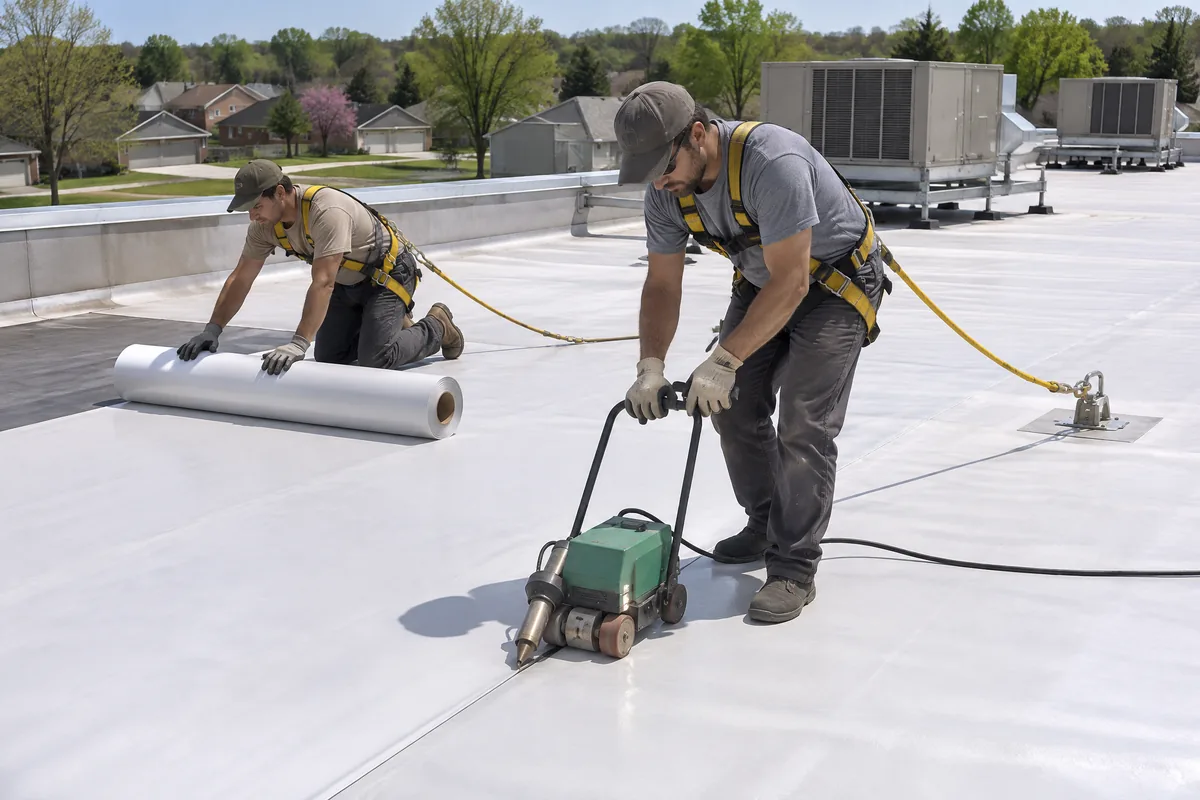
Commercial roof systems common in Tulsa
| System | What it is | Where you see it |
|---|---|---|
| TPO | Single-ply white or light membrane with heat-welded seams | Retail, offices, newer warehouses |
| EPDM | Black synthetic rubber membrane, glued or ballasted | Older commercial buildings, additions |
| Modified bitumen | Asphalt-based rolls, torch-down or self-adhered, often in two plies | Small commercial, flat residential sections |
| Built-up roofing (BUR) | Multiple layers of felt and asphalt with gravel | Older schools, churches, industrial buildings |
| Metal panels | Standing seam or through-fastened panels | Warehouses, shops, agricultural buildings |
| Roof coatings | Silicone or acrylic applied over a sound existing roof | Extending the life of a roof that is still dry underneath |
Why commercial roofs fail
Low-slope roofs are designed to drain, not to shed water like a pitched roof, so standing water, clogged drains and scuppers cause more trouble than anything else. In Tulsa, add hail impacts on membranes and rooftop units, wind lifting perimeter edges and flashing, and summer heat that ages membranes and seams. Foot traffic from HVAC servicing also wears paths and punctures.
Repair, coat or replace?
A core cut or infrared moisture scan can show whether the insulation under the membrane is dry. If most of the roof is dry and the membrane is sound, targeted repairs or a coating can extend its life. If large areas of insulation are wet, coating over them traps moisture, and replacement is usually the better long-term choice.
Maintenance plans
Twice-yearly inspections, typically in spring and fall, plus checks after major storms, catch small problems before they reach the ceiling tiles. A maintenance visit usually includes clearing drains and gutters, checking seams and flashing, looking at penetrations and rooftop equipment curbs, and photographing anything that needs attention.
Licensing for commercial roofing in Oklahoma
Oklahoma requires roofing contractors to register with the Construction Industries Board, and roofers doing commercial work need a commercial endorsement on top of that registration. Ask for the registration number and endorsement, plus certificates of general liability and workers' compensation insurance, before work starts on your building.
Planning a commercial re-roof
- Get a moisture survey so you know what can stay.
- Ask about tapered insulation to fix ponding areas.
- Confirm manufacturer warranty terms and who registers the warranty.
- Plan work around business hours, noise and rooftop equipment shutdowns.
- Check whether the work needs a permit with your city.
Storm damage on commercial buildings
After hail, membranes can be bruised without visible holes, and rooftop units, skylights and metal edges may be dented. Document damage quickly, tell your insurer, and have a provider check drains and seams before the next rain.
Rooftop equipment and penetrations
Commercial roofs carry far more equipment than homes: HVAC units, exhaust fans, gas lines, conduit, skylights and satellite mounts. Every one of those needs a curb or boot properly flashed into the membrane, and each is a place where leaks start. When contractors service rooftop units, ask them to use walk pads and report any damage, because a dropped tool or a screw left on the membrane can puncture it.
Commercial storm claims
Commercial property policies vary even more than homeowners policies, with different deductibles, coinsurance clauses and exclusions. Have the building's roof documented before storm season so you have a baseline to compare against after hail. Photos of drains, seams and rooftop units in good condition make it easier to show what changed.
Questions people ask
Do commercial roofers in Oklahoma need special licensing?
Yes. In addition to registering with the Construction Industries Board, roofers doing commercial work must hold a commercial endorsement.
How long does a TPO roof last?
It varies with membrane thickness, installation quality, traffic and weather. Ask the provider for the manufacturer warranty period on the system they propose.
Can a coating stop leaks on our flat roof?
A coating can seal a roof that is still largely sound and dry underneath. If insulation is wet, the wet areas usually need to be replaced first.
How often should a commercial roof be inspected?
Twice a year and after severe storms is a common recommendation.