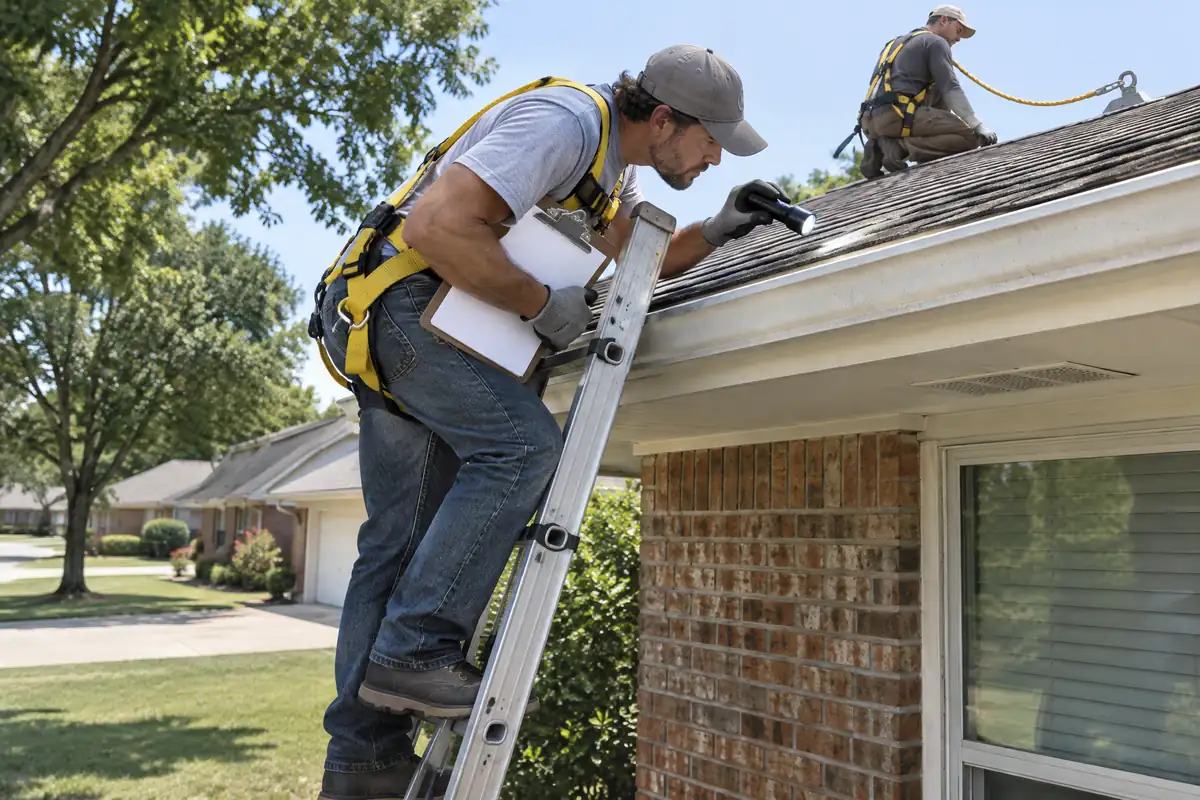
When should you get a roof inspection?
- After a hail or wind storm that hit your part of town, even if you see no obvious damage.
- Before buying a home. A general home inspector may not walk the roof. A roofer can tell you more about remaining life.
- Before selling. Knowing the roof's condition lets you repair or disclose with confidence.
- When the roof reaches 15 years or so, to plan for replacement instead of being surprised by it.
- When you notice stains, granules in gutters or higher energy bills.
What a thorough inspection covers
| Area | What is checked |
|---|---|
| Shingle surface | Hail bruising, cracks, granule loss, curling, blistering, creased tabs, missing pieces |
| Flashing | Chimney, wall, skylight and valley flashing for gaps, rust and failed sealant |
| Penetrations | Vent boots, exhaust caps, satellite mounts and any old holes |
| Ridge and hips | Cap shingles, ridge vent condition and fasteners |
| Edges | Drip edge, starter course, fascia and soffit |
| Gutters and downspouts | Dents, sagging, blockages and granule build-up |
| Attic (where accessible) | Water stains, daylight, decking condition, ventilation and insulation |
| Soft metals | Dents on vents, gutters and AC fins that show hail size and direction |
What you should get afterwards
Ask for photos, not just a verbal verdict. A useful inspection report shows each problem area with a close-up and a wider shot for location, notes which slopes are affected, and gives a recommendation: no action, repair, monitor, or replacement. If storm damage is found, the report is a good starting point for an insurance claim.
How long does a roof inspection take?
For a typical single-story home, an inspection usually takes under an hour on site. Larger, steeper or more complex roofs take longer, as does a detailed hail inspection with test squares on every slope.
Free inspections: what to expect
Many roofing companies in Oklahoma offer free inspections, especially after storms. That is normal, but go in knowing the inspector is also hoping to win the work. Ask for photos, ask what they would do if it were their house, and do not sign a contract on the spot. Under Oklahoma law you can cancel an insurance-funded roofing contract within 72 hours of receiving written notice that your claim was denied in whole or part, and a roofer must tell you about that right in writing.
Inspections for buyers and sellers
For a purchase, ask the roofer to estimate the remaining life of the roof, note any previous repairs, and check whether there are multiple layers. That information helps with negotiations and with getting insurance quotes, because some insurers price policies by roof age and condition.
Drones and walk-on inspections
Some providers use drones to photograph steep or fragile roofs. Drone photos are useful for an overview, but hail bruising is often only detectable by touch, so a walk-on inspection is still the standard for storm damage where it is safe.
Can I check anything myself?
From the ground, with binoculars, you can spot missing shingles, sagging ridges, damaged vent caps and loose gutters. From inside, check ceilings after heavy rain and look in the attic with a flashlight for stains or daylight. Leave anything on the roof itself to a roofer with the right safety gear.
Questions people ask
How often should a Tulsa roof be inspected?
Every one to two years is sensible, plus after any significant hail or wind storm in your area.
Is a roof inspection the same as a home inspection?
Not quite. A home inspector covers the whole house and may inspect the roof from the ground or a ladder. A roofer focuses on the roof and can walk it, test shingles and check flashing up close.
Will an inspection tell me if I have hail damage?
Yes. A hail inspection looks for bruises, fractures and granule loss on each slope, plus dents on soft metals, and should include photos.
Can I be on the roof with the inspector?
For safety reasons most providers prefer you stay on the ground. Ask them to show you the photos and walk you through them afterwards.